
Physical AI × Expanded Humanities
Human imagination. Physical intelligence. Regenerative cities.
A Brooklyn Navy Yard institute advancing Physical AI × Expanded Humanities for healthier communities.
Physical AI, Cities, and the Expanded Humanities: Bringing Technology, Environment, and Everyday Experience Together for Healthier Communities
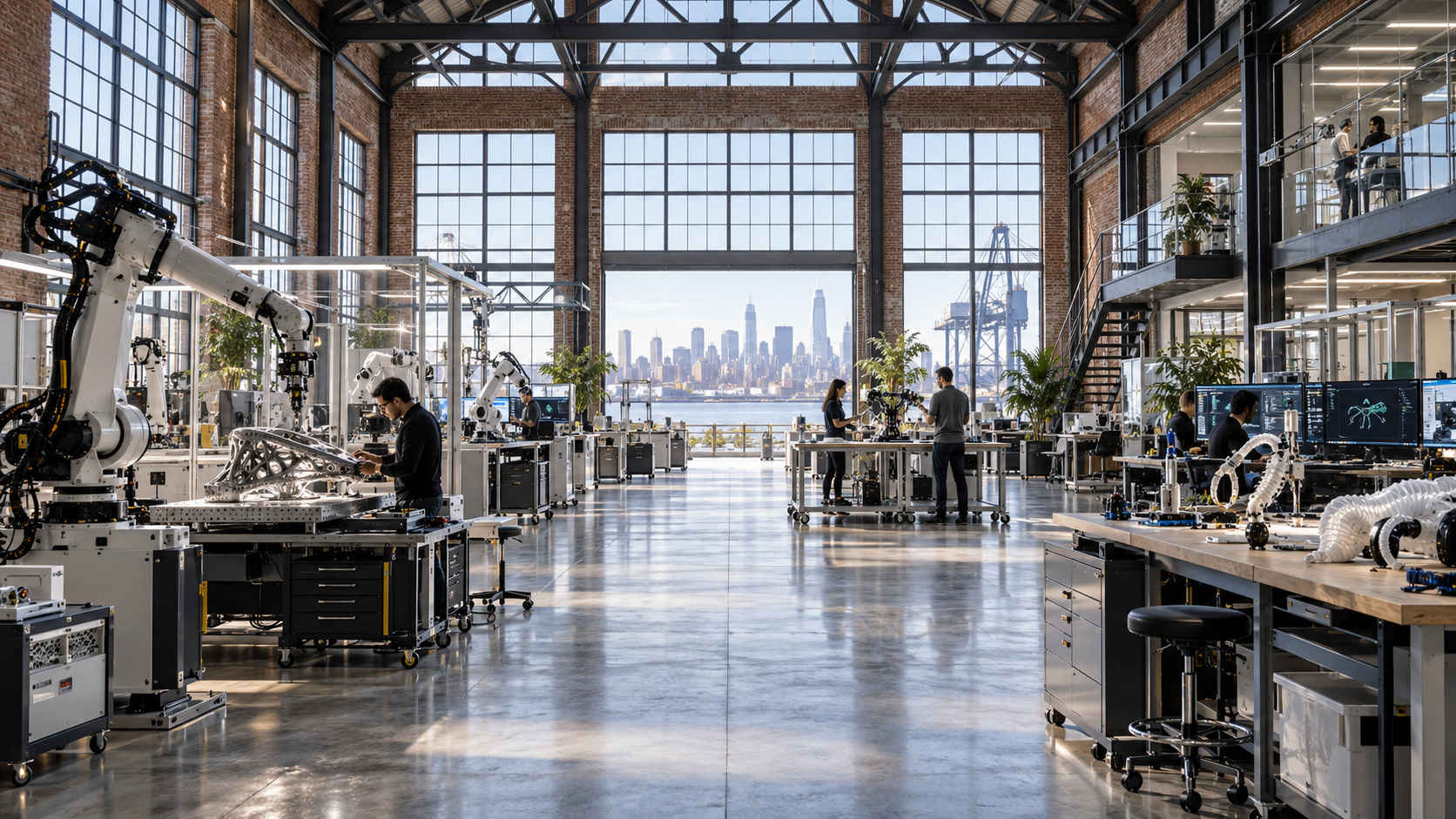
AIXHUMAN is one interdisciplinary group advancing Physical AI × Expanded Humanities. Our community spans NYU Gallatin, Brooklyn Navy Yard, TED Fellows, Terreform ONE, Lifespan Research Institute, CIV:LAB, and The Cooper Union. We share resources, laboratories, ideas, and expertise to connect intelligent technologies with culture, living systems, and everyday urban life. Think of it as SpaceX meets Shakespeare’s Globe Theatre: advanced technology and radical experimentation combined with a deeply human space for culture, creativity, interaction, and discovery. The ambition is not simply to advance AI, but to humanize it—to build and test the physical environments where humans and intelligent machines will live, work, create, and learn together. Ultimately, it asks a bigger question: How can AI strengthen the human side of life and our pursuit of happiness?
Physical AI × Expanded Humanities is our shared framework for rethinking the relationship between intelligence, urban life, and the environments that sustain us. As artificial intelligence enters robots, fabrication systems, buildings, and other material settings, the city becomes a place where computation has tangible consequences. A decision can move a machine, change a material assembly, or influence the conditions of a shared space. This transition invites a larger cultural project: joining technical experimentation with ecological knowledge, historical understanding, creative practice, and public judgment. The ambition is to develop forms of intelligence that expand human capacity while strengthening the living systems and civic relationships on which cities depend.
Physical AI concerns systems that use sensing, reasoning, and action to engage with the material world. For urban design, this opens a field of inquiry across robotic fabrication, spatial perception, adaptive environments, and the coordination of complex physical processes. These systems encounter friction, uncertainty, gravity, weather, maintenance, and the unpredictable behavior of people. Their intelligence is tested through interaction rather than through language alone. A model of a street or building may support exploration, but it remains a selective account of a changing place. The movement from simulation to a working prototype therefore requires observation, calibration, and a willingness to revise assumptions.
Cities offer a demanding setting for this work because they bring many forms of knowledge into close contact. They contain engineered infrastructure and informal practices, financial systems and family routines, legal boundaries and ecological flows. The same intervention can affect a building owner, a maintenance worker, a pedestrian, and a habitat in different ways. Physical AI research in this setting should begin with clear questions about purpose and context. What problem is being addressed? Whose experience defines success? How can an intervention be evaluated over time? A more capable machine is valuable when its capabilities contribute to a more inhabitable, accessible, and resilient urban environment.
Expanded Humanities
Expanded Humanities brings ethics, history, philosophy, literature, the arts, and cultural inquiry into how intelligent technologies are imagined, built, and used. These disciplines actively shape research, fabrication, and public life. They help us decide what to build, whose experiences matter, and how technology can strengthen human agency, creative expression, and collective care. Physical AI supplies the capacity to sense and act; Expanded Humanities shapes purpose, interpretation, and public value.
Expanded Humanities provides an active intellectual framework. History, philosophy, literature, art, and cultural criticism can enter the laboratory as active methods of inquiry. They help examine the stories embedded in technologies, the categories used to describe people and places, and the values expressed through design decisions. Architectural prototypes become objects of interpretation as well as technical evaluation. A sensing system raises questions about what can be measured and what remains outside the measurement. A robotic process invites reflection on craft, labor, authorship, and the distribution of opportunity. These questions enrich the research brief and shape the experiments that follow.
Living Systems and Regenerative Cities
Ecology extends the frame beyond human convenience. An urban environment is also a living territory of soils, plants, animals, microorganisms, water, and atmosphere. A material that performs well in a demonstration may have a difficult life cycle; an efficient operation may shift its costs elsewhere. Our research agenda therefore brings questions of resource use, repair, biodiversity, and long-term stewardship into the development process. Living materials, ecological fabrication, and environmental observation offer opportunities to explore different relationships between a designed object and its surroundings. Their promise must be assessed through specific evidence and the conditions of each application.
A New York Exchange
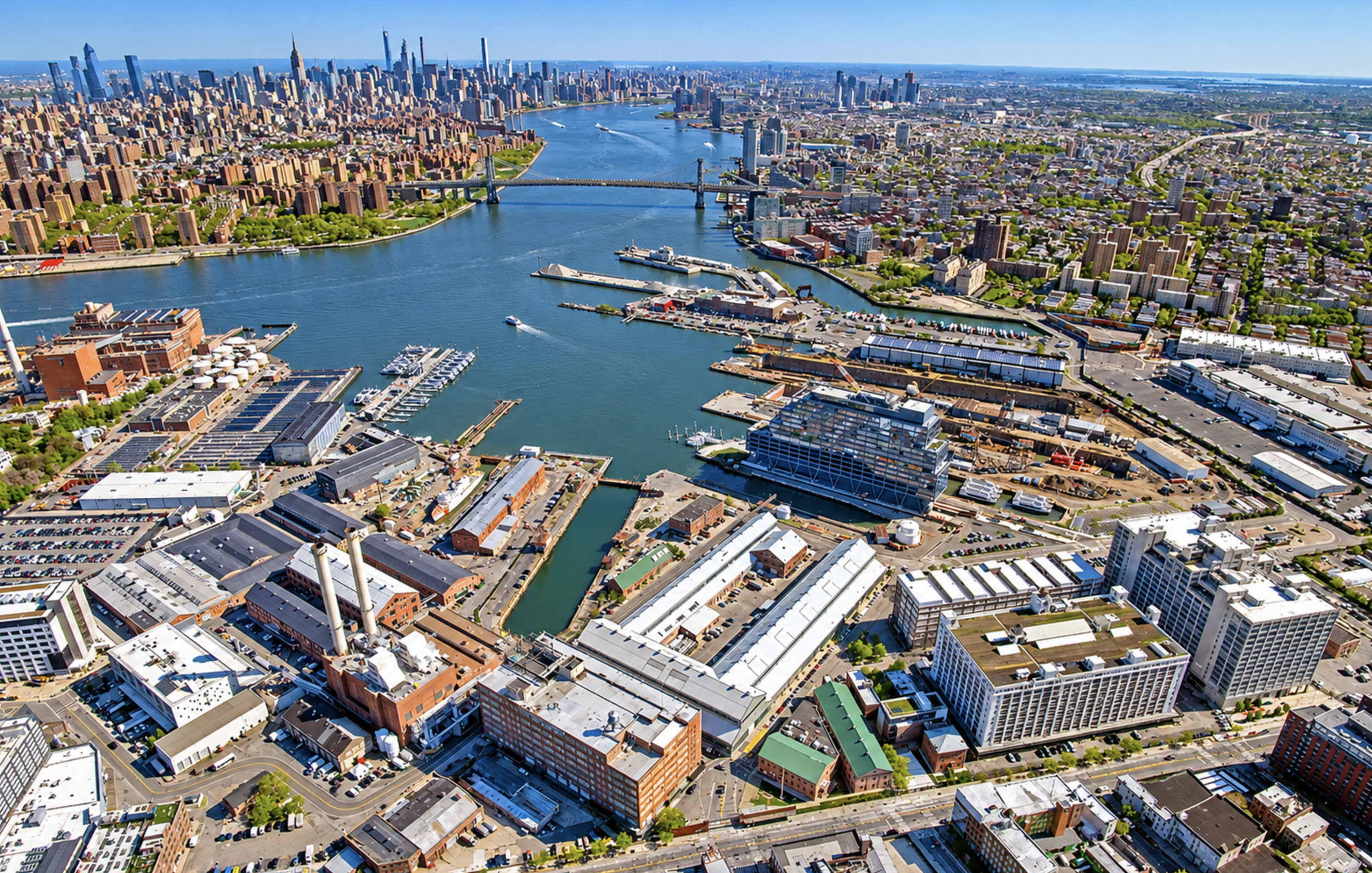
AIXHUMAN is one group rooted in New York and connected internationally. Our shared community spans interdisciplinary scholarship at NYU Gallatin, architectural experimentation at The Cooper Union, the industrial and civic life of Brooklyn Navy Yard, urban innovation at CIV:LAB, ecological design at Terreform ONE, biological inquiry at Lifespan Research Institute, and the public exchange of ideas through TED Fellows. We connect scholarship, making, local experience, and public conversation through the common mission of Physical AI × Expanded Humanities.
Our program connects seminars to material experiments, experiments to prototypes, and prototypes to public discussion. It links the history of urban problems with the design of tools to investigate them, and pairs technical performance with cultural interpretation. Community participation helps define research questions and assess what a prototype overlooks. Exhibitions, workshops, and accessible publications make Physical AI × Expanded Humanities visible and open to public exchange.
The larger proposition is a form of urban intelligence built through collaboration. Physical AI contributes embodied capabilities; the humanities contribute interpretation and critical judgment; ecological design contributes attention to the conditions of life; and civic participation contributes knowledge grounded in place. Together they create a framework for exploring how people and machines might make, maintain, and imagine cities. The measure of progress is the capacity to create useful, legible, and reparable interventions that people can shape over time. Physical AI × Expanded Humanities invites a future in which technical invention and cultural understanding develop together, and in which expanding intelligence also expands the possibility of collective care.
PEOPLE & CONNECTIONS
AIxHuman
Organizations & Programs
NYU Gallatin, Brooklyn Navy Yard, TED Fellows Program, Terreform ONE, Lifespan Research Institute, CIV:LAB, and The Cooper Union
Shape Physical AI × Expanded Humanities
Work with AIXHUMAN on research, making, education, and public life for healthier communities.